
Most of our sessions take place with group sizes of between 4 and 8. In some of our sessions it has been recognised that it is beneficial to have larger groups such as drama and sports. An appropriate number of staff are always with each group. Sessions at CANTO are designed to develop students abilities and help them reach their potential. Students can choose from a diverse range of activities
The Core Sessions are:
Functional Skills: Students work in groups of between 4-8 with a dedicated functional skills tutor. Sessions are designed to support the student both towards a recognised qualification as well as an increased independence.
Personal and Social Skills: Students undertake a wide range all aimed at supporting their development of key personal and social skills such as positive relationships, being able to work with others, communication skills, and developing a tolerance of others.
ICT: Students work in our IT room on a variety of tasks in groups of up to 8. The work can vary between use on recognised software such as Word and Publisher to using the internet and emails as well as covering internet safety.
Work Centre: Students have the opportunity to practice work based skills in a variety of practical ways.
Current Vocational Options: Students undertaking an award will undertake a range of vocational options including horticulture, photography and cookery.
Art and Design: Students are encouraged to explore their creative side and cover topics from traditional painting, drawing to jewellery and model making.
Cookery: Students learn the basics of kitchen hygiene and have the opportunity to explore some basic recipes in our kitchen, which they are able to take home.
Photography: Students are encouraged to explore their creative side. As well as being taught the basic rules in how to take good pictures. Students explore image manipulation through the use of an editing software.
For more info click below on each session:
Intent
The world in which we live in rapidly changing and becoming digital. In order for students at CANTO Learning to thrive we need to prepare them for this digital world. Within ICT, we learn how to get specific information from Internet, use Microsoft office applications, communicate with others, be aware of dangers online, shop online, be able to order meals for home delivery and organise travel abroad. At CANTO Learning, ICT is one of the compulsory functional skills subjects along with English and Maths.
Implementation
The ICT schemes of work are designed to equip students with knowledge about health & safety practices in using ICT and how to stay safe online. We support students to be aware of ICT skills needed in the workplace linking the theory to real life situations. Furthermore, the practical tasks in ICT are also designed to help increase students’ awareness of cultural diversity by examining the cultures of other countries, and through this, fostering an understanding and tolerance of cultural differences in the UK and promoting British Values. All the ICT sessions and workshop are mainly based at the college.
Impact
Before taking the ICT course, students will be assessed for their levels using initial assessments and completing ForSkills booklets. After baselining assessment, students will work towards their NCFE ICT qualifications for up to 45 learning guided hours on each level. Several ICT formative assessments will be used throughout the course, usually one for each term, so that we can measure students’ progress and build up their confidence. Students’ learning progress will be recorded weekly after their ICT sessions using Excel Student Progress Tracking Sheets. At the end of their course, students will finally be assessed with summary assessment and attempt several mock exams before sitting for their papers, leading to NCFE ICT functional skills qualifications from Entry 1 to Level 2. After achieving NCFE Level 2 qualification in ICT, students can go on to study BTEC Information Technology Level 3 which is a two-year course available at many colleges throughout the country.
Intent
Mathematics at CANTO Learning helps to develop students’ Mathematical skills, understanding and knowledge which will enable them to solve different problems in their daily lives. Maths provides a significant foundation to everyday life which is connected to all sectors of life such as technology in the home, community, game consoles, banking, engineering, shopping and advancement in learning. Where relevant, students gain qualifications that allow them to go on to destinations that meet their interests, aspirations and the intention of their course of study.
Implementation
At CANTO Learning the core topics such as Number, Measures and Space and Handling Data are explored. The tutors will deliver the Maths content clearly by promoting suitable discussion concerning the subject matter. For effective results, the tutors will check students’ understanding methodically, identify misconceptions accurately and provide clear, immediate advice and feedback. After checking students’ understanding, the tutors will respond and modify their teaching approaches as necessary, by elaborating or differentiating approaches to meet the individual needs of the students.
The tutors create an environment which is conducive to learning and allowing the student to focus on learning. The resources and materials that are used in the teaching/learning process must meet the individual needs and level of the students. To promote inclusion of all the students at CANTO, tutors use a wide range of approaches including questioning by the class teacher as part of whole class teaching, questioning by the class teacher as part of a conversation with individuals or small groups, the use of mini whiteboards, wipeable board markers, peer to peer interaction
Students get opportunities to learn practically such as measuring the lengths and widths and then working out area and perimeter of their classroom and tables. The tutors engage and use motivation to provide challenge to all students at all levels, encouraging students to think creatively and reason logically by giving tasks which are practical. Our students are taught in small groups which gives the opportunity to personalise learning including delivery and feedback.
Impact
During the first weeks, the students are given an initial assessment in Maths to determine what level the student will be operating at. At the end of every session, the tutor makes a short assessment to identify how much the students have learned in that session. The assessments include asking the students some questions based on the concepts taught, completing tracking sheets which show achievement of the objectives, observing participation both verbally and in writing, using individual targeted questions and marking of the evaluative exercise. At the end of the first term, the students write a formative assessment to assess what they have learnt and towards the end of the year students write a summative assessment. During the last term of the year the Maths tutor selects students who have mastered the required skills and knowledge and are ready to write externally set assessments depending on their performance. Students who are selected for Maths Entry Levels 1-3 will write externally set assessments which are internally marked. For Levels 1-2, the students will write externally set assessments which are marked externally as well. The students who are not ready to write externally set assessments will end with internally set assessments and will be registered during the next academic year when they are ready. CANTO aims at increasing the number of candidates who write assessments every year to boost the confidence and self-esteem of the students. After assessment students can gain further qualifications from Level 2 upwards. However we use Maths as tool to primarily promote independence by securing knowledge in key areas for example money and time.
Intent
Personal and Social Skills at CANTO Learning has been devised to enhance our students’ well-being, communication, and confidence as they progress into adulthood. We aim to differentiate for each student by using their Educational Health Care Plans to carefully prepare a route that suits their developmental needs as well as meeting their desired outcomes.
Implementation
Sessions are levelled at the student’s ability and delivered in a constructive manner. Praise and mutual respect are used to create a positive environment. We ensure the students feel equally valued, safe and develop positive attitudes towards themselves and others.
Topics covered include:
- Human Rights
- Beliefs
- Morals and Values
- Understanding Emotions
- Respectful relationships
- Communication and listening skills
- Discrimination and Diversity
- Healthy Lifestyles
- Mental Health and Wellbeing
Students can use these sessions as an open forum to ask questions and gain knowledge. Most sessions are based on site however there are sessions based in the community in order to link classroom learning with real life experience for example identifying locations in the community to meet safely or places you could exercise.
Impact
Personal and Social skills is mainly a discussion-based subject, assisting students with their social, communication and listening skills in a relaxed atmosphere. The premise of the sessions is to help develop self-confidence and promote resilience in our unique, young adults; encouraging them to become respectful, caring, self-assured and thrive in the wider world. Students build up a portfolio of work that is regularly assessed by the tutor.
Intent
At CANTO we aim to equip students with the soft skills required to understand the world of work and identify strengths in themselves pertinent for work. These sessions are aimed at exploring and developing students ability to access different forms of work, suited to their individual levels and skill set. Students are encouraged to build on their problem solving, collaborative working, persistence and independence through a range of practical and repetitive activities. Students are supported and encouraged to take on the role of team leader, making informed choices and following systemic instructions, increasing their confidence and willingness to try new tasks, whilst learning from their mistakes in a controlled environment.
Implementation
Sessions are devised in a structure of systemic and repetitive activities, designed to increase students independence of a set task over a period of time. Topics being covered range from window cleaning, card making, cleaning, picking and packing, recycling, book making and many more. All activities are assisted with visual instructions and differentiated to meet individual needs, promoting critical thinking and problem solving in a supportive classroom environment.
Impact
Students are assessed weekly through the use of a session tracker, highlighting independence within a task, acting upon and following instructions, as well as collaborative working with others. Due to the low levels of educational attainment, students acquire important life skills of determination, improved self-esteem, self-motivation, increased ability to listen and retain information and acceptance of the value of work.
Occupational Studies for the Workplace – NCFE Level 1 Award
(Units: K/505/4198 – F/505/4210 – M/505/5255)
Intent
Pathway four students will participate in a Level 1 award in Customer Service skills derived from units available from NCFE’s Level 1 Occupational Studies for the Workplace. The development of this course of study intends to provide students with meaningful knowledge and experience which will support their entry into the workplace. This course is assessed with a portfolio of evidence that demonstrates achievement of each of the outcomes for every unit of that forms the award. Portfolios used at CANTO Learning are bespoke and produced to a high standard to accommodate the various needs and learning styles of the students in pathway four.
In order to provide adequate opportunity for students to achieve each outcome, there are several pre-determined sessions in which students are able to revisit topics is required. Students participating in this qualification will develop skills in the verbal and non-verbal communication, team and collaborative working, dealing with complaints, and understanding workplace safety and consumer law. Additionally, students will have opportunity to develop and explore a range of functional skills, including use of Windows based Office applications, use of appropriate questioning techniques, further development of speaking and listening skills, and reading and writing comprehension skills.
Implementation
This qualification introduces students to the basic skills requires across the customer service industry, especially in the retail and hospitality industry. Students will be building a portfolio of evidence by engaging in individual and collaborative working, participating in role-play activities, reviewing recorded customer service encounters and communicating with customers in the CANTO Learning Coffee Shop.
During sessions, students have access to a range of resources to support the development of the skills and knowledge they required to achieve each outcome. These resources include Windows 11 based laptops with a full suite of Office based applications, access to an IWB, bespoke portfolio-based tasks, and access to a working coffee shop.
Impact
This course is formally assessed with a compiled portfolio of evidence. The portfolios used at CANTO Learning have been carefully designed and developed in-house to ensure a range of learning preferences and styles are accommodated. Within the structure of the course, there are opportunities for students to revisit topics, as required, with additional support from the course tutor. This tailored support accounts for unique circumstances, providing all students with the best chance of success. This qualification will provide students with good foundation knowledge of customer services within a range of settings which can be applied to a variety of job roles and industries.

Intent
At CANTO Learning we ensure that equality, diversity, and inclusion are imperative in our everyday practice. To enhance this practice, we teach and explore different cultures and ways of life in our culture sessions with students. Teaching cultures enhances the student’s knowledge on different cultures and ways of living; it also helps them build more tolerance towards differences in our multicultural society. This in turn provides students with the ability to accept and support one another inside and outside of the college environment. Expanding their knowledge on different cultures provides the students with increased opportunities when accessing the community and building healthy relationships.
Implementation
During our culture sessions we explore different cultures, countries, religious events, and memorial events. This is delivered in a variety of ways for example using:
- Memory and quiz games
- Art
- Sensory play
- Practical tasks
- theory-based worksheets.
We try to combine many of these methods so that students get the full experience of that cultural theme. Having such a diverse range of resources ensures that we are meeting all learning styles and all students reach their maximum potential.
Impact
We believe that exploring different cultures instils an understanding of self-respect and belonging and a sense of respect and acceptance for other cultures and beliefs. Our culture sessions also enhance social interaction, language, and communication, which we believe are important factors for effective learning to take place. We are confident that all these factors have a positive impact on their educational experiences and outcomes.
Intent
The Intent of English at CANTO Learning is to develop skills which can enable students to speak, listen and communicate to thrive in society. We endeavour to apply the developed skills effectively in a range of purposes for example: in the workplace, in other real-life situations and to provide the basis for further studies. English will develop skills and understanding of written language in specific contexts for expression of feelings and views. English sessions aim at developing independence in construction of written language to communicate in specific contexts including debates, family gatherings and playing games. The subject is delivered in conducive environments in which students can verbally express themselves clearly without prejudice.
Implementation
At CANTO Learning, we try and maximise the students’ potential by delivering sessions which meet the individual needs of each student. In each group we have students with various abilities in reading, writing, speaking, listening and communication. Each student will have set tasks and activities which are tailored to meet individual needs. Although students will be working on the same topic, work is differentiated to maximise potential. We create an environment which allows students to focus on learning.
In reading, students are taught how to find specific information from texts, reading for understanding, identifying, and extracting the main points and ideas from texts. During reading sessions, we teach students how to use effective strategies to find the meaning of words and to read and compare information from different texts.
In writing, the students are taught how to write for describing, for finding information, for arguing, for persuading and how to use basic punctuation to improve understanding. At CANTO Learning, we have a variety of resources such as desktops, laptops, and iPads that are available to students to suit their learning needs. We also have many subject based books, magazines, pamphlets, and catalogues that we use for the variety of topics covered. During sessions, tutors will show the students how to attempt a task, asks them to try in their groups and then to try individually gradually reducing support when necessary. The work the students create is kept in on the computers in room.
Impact
When students join CANTO Learning, they complete an English initial assessment booklet which is marked by the English tutor. This will determine their level, strengths and areas to improve on. During the year, curriculum coverage and progression against learning outcomes and cross curricular writing opportunities will be assessed. From September 2023 onwards the iCan students moved from written based assessments to portfolio-based assessments in both English. This approach was adapted due to the nature of our students who have a wide range of learning difficulties such as anxiety, dyslexia, autism etc.
The NCFE has provided Essential English portfolio materials for Entry Levels 1-3 and Level 1. The students are taught different topics based on units and must complete portfolios individually. In short, students learn concepts, knowledge and skills during their taught English sessions and then apply the skills and knowledge learnt to the portfolio units. The English tutor marks all the completed units and fills the assessment forms. NCFE will be invited to ensure that the portfolios were completed and marked according to guidelines. The Speaking, Listening and Communication specification has been changed and it now includes writing and controlled speaking.
See below topics taught in essential English portfolios,
| Entry Level 1 | Entry Level 2 |
| Unit 01: Listening to Information. Unit 02: Listening and Responding to Information. Unit 03: Speaking With Others. Unit 04: Introduction to reading skills. Unit 05: Reading words and short texts. Unit 6: Introduction to essential writing skills. Unit 07: Writing and spelling words. Unit 08: Participating in short discussions. Unit 9: Introduction to alphabetical order. |
Unit 01: Listening and Responding. Unit 02: Introduction to discussing with others. Unit 03: Introduction to speaking to be understood. Unit 04: Reading skills. Unit 05: Introduction to reading to understand. Unit 6: Alphabetical order. Unit 7: Essential writing skills. Unit 08: Writing and spelling words and phrases. |
| Entry Level 3 Unit 01: Developing Listening and Responding Skills. Unit 02: Discussing with others. Unit 03: Speaking to be Understood. Unit 04: Reading skills. Unit 05: Reading to understand. Unit 6: Developing an understanding of alphabetical order. Unit 07: Developing essential writing skills. Unit 08: Essential spelling and writing. |
Level 1 Unit 01: Listening, understanding and responding to others. Unit 02: Communicating with others. Unit 03: Participating in Discussions. Unit 04: Introduction to Knowledge and application of punctuation, grammar and spelling. Unit 05: Composing texts. Unit 06: Interpreting straightforward functional texts. Unit 07: Introduction to Understanding Prose Writing and Poetry. |
Intent
At CANTO Learning, we believe in supporting our students to become as independent within their communities as possible. Community sessions at CANTO Learning provide a platform for students to recognise the features and benefits of a local, national, and global community. The topics covered in community sessions focus on supporting students to make good choices in a community setting and empower students to know how to respond to emergencies when they are in the community.
Implementation
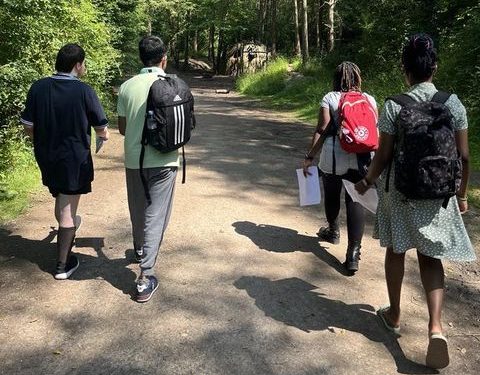
During community sessions at CANTO Learning, students are encouraged to join in debates and discussions on a range of topics. The topics we cover in community sessions include keeping safe in the community, organisations and groups that can help us, environmental issues, local services and transport, and elections and British Values.
Students will also participate in regular environmental action in the local area, helping to support the Northamptonshire Litter Wombles group to keep the local community clean and safe for all.
The delivery of community sessions will be tailored to meet the students EHCP needs. Students are supported by staff to enable them to feel safe and access the community in which they live.
Impact
Whilst there is no formal qualification associated with community sessions, student progress is monitored and assessed at regular intervals over the year. Students are assessed in a variety of areas such as expressing ideas, collaborative working, keeping safe, and engagement in sessions. From engaging in sessions, students demonstrate increased confidence whilst accessing the community. Additionally, students develop skills in identifying hazards in the community and can state how to respond to a range of emergency situations safely.

Intent
At CANTO, it is intended that through volunteering sessions, the students form a foundation understanding of skills used within the workplace and gain an awareness of work place processes. Volunteering sessions are aimed at exploring and developing how the students engage with and undertake work tasks whilst being in an external environment to CANTO. It is intended that through a year-long volunteering placement, the students gain skills that can be transferred to a CV if they later choose to pursue employment or volunteering opportunities post-education. Students are taught skills such as understanding health and safety, working as a team, working independently, communication skills and time management skills, using initiative and problem solving. It is intended that the students develop confidence, undertake new work tasks, engage with unfamiliar people whilst being coached and guided by familiar staff.
Implementation
The students are supported by the tutor to attend the external work placements.
Currently on Wednesdays, the volunteering groups attend a placement called Briar Hill Community Hub. This is a place in the local community that provides people in need with a hot meal, free food and clothes, as well as access to a food bank. The students engage in tasks such as setting up the community café, organising donations, completing admin tasks, handling food and so on. This placement provides the students with opportunities to complete manual handling work tasks, problem solve, utilise health and safety skills and work independently. This placement exercises the student’s ability to communicate and work with each other, as well as work alongside people they are unfamiliar with.
Each week, there are a variety of tasks to complete set by the placement and the work is then delegated to each student. Over time, the students are expected to become familiar with the routines and work tasks so that they become less dependent on prompts and support from the tutor.
Impact
Although there is no formal qualification associated with volunteering, student progression is regularly assessed throughout the course of the academic year. Students are assessed on various areas including their application to work, how they work as a team, how they work independently, the speed in which they work, how they exercise safety precautions and how they communicate with those around them. The students also complete a volunteering portfolio at different intervals where they self-assess throughout the year too, this provides a fantastic way for the students to self-reflect and discuss areas to improve on. The students are also assessed weekly in accordance with their EHCP targets.
From engaging in sessions, the students learn and acquire a variety of employment skills that can be applied universally across all aspects of their life.

